
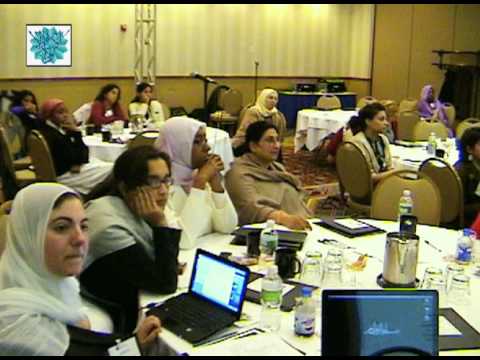
On December 13, 2009 at 1:00PM EST, a virtual meeting about domestic violence, featuring several gender rights activists, will occur right here on Altmuslimah. Join us for this important event – the instigator for what Altmuslimah and partners hope will be fresh perspectives, solution-oriented discussion, and an active campaign against domestic violence in the Muslim community.
Welcome to our online event! If you’d like to enter a comment or question during the event, you may do so in the box below. You will be prompted to sign in – feel free to do so, or skip this step to comment anonymously. If you have an account and want to log in, type “/login” into the box. Your comments and questions will appear on this website and others, so please be respectful and considerate. Abusive behavior may result in your being removed from the event.
Discussion Scenarios1) Unfriendly mosque environments for domestic violence work: At a Philadelphia mosque, a guest imam was heard giving a speech about domestic violence. His remedy? For men to avoid breaking their wives’ bones or hitting them above the waist. How, from your various perspectives, can campaigns on domestic violence in the Muslim community respond to environments like these?
2) The gray area between civil and religious remedies in cases of domestic abuse: A New Jersey woman had gotten a civil divorce from her husband, though there were still some questions in her mind. What really was the status of her religious marriage at this point? How do we navigate the use of civil legal remedies (e.g. restraining orders, divorce) given their divergent status from religious recommendations/remedies?
Moderators
Abbas Jaffer
Associate Editor, Altmuslimah
Masters Candidate, Harvard Divinity School
Cambridge, MAShazia Riaz
Associate Editor, Altmuslimah
Voorhees, New JerseyPanelists
Shenaaz Janmohamed
Training Coordinator, California Partnership to End DV
San Francisco, CaliforniaBonita R. McGee
Board Member, Islamic Social Services Association (Chat username: darwi73)
DC Metro – Northern VirginiaMaha Alkhateeb
Co-Director, Peaceful Families Project
Great Falls, VirginiaAnas Coburn
Director, Dar al Islam; Founder of Project Sakinah
Putney, VermontZerqa Abid
Project Manager & Media Consultant for Project Sakinah
Hilliard, OhioMohammad Khalil
Founder of Muslim Men Against Domestic AbuseAimee Thompson
Executive Director, Close to Home
Boston, MassachusettsKulsoom Hasan
Staff Attorney, Aid to Victims of Domestic Abuse
Houston, TexasAlisha Mohammad
Attorney & Immigration Practitioner, Law Office of A.M.
Richmond Hill, New YorkGuest Contributors (offline)
Imam Mohamed Magid, Vice President of ISNA, Imam and Executive Director at the ADAMS Center, Member of PFP
Sterling, VirginiaImam Khalid Latif, Executive Director and Chaplain (Imam) for the Islamic Center at New York University
New YorkCommunity Action Projects
Let’s use this V2A web event as a kick off to a DV awareness and prevention campaign, starting now through February – the month marking the one year death anniversary of Aasiya Zubair. Sign up for projects or express support in the comment box below. (Contact information will be transferred to a private form and deleted from the comment box at the end of this live event to protect privacy.)
Registering projects with Project Sakinah, a new site launching on January 1st, 2010, is a great way to keep a log of the all the projects being carried out.
Send video clips of your projects to us, Altmuslimah, an online magazine devoted to solution-oriented commentary on gender-in-Islam.
1. Fund-raise to bring the Garments for One Another video package and other materials into mosque and community libraries. These invaluable resources are designed to guide religious leaders and community groups helping DV victims. Organize simple fundraisers like Jummah bake sales. It’s a great way to involve youth in community projects!
Project mentors: Shazia Riaz, Maha Alkhateeb2. Sponsor mosque khutbas and lectures on DV for Friday, February 19, 2010. Suggest adaptations of Hamza Yusuf’s khutba and Imam Majid’s open letter. Encourage the incorporation of useful information from recommended sources.
Project mentor: Imam Khalid Latif, Peaceful Families Project.3. Take a stand against domestic violence. Participate in a video advocacy and education campaign to help end DV.
Project Mentors: Maha Alkhateeb, Shenaaz Janmohamed4. Digital diaries at Altmuslimah: connect survivors of domestic violence willing to anonymously share their stories with our project lead.
Project leads: Yusuf Misdaq, Shenaaz Janmohamed. Mentors: Aimee Thompson, Yasmin Turk5. Promote healthy relationship messages on Valentine’s Day 2010 by ordering greeting cards for friends, family, and community with Islamic messages about healthy relationships. Printable templates will be added at Project Sakinah in coming weeks, or cards can be ordered through a project lead.
Project leads: Zerqa Abid, Shazia Riaz, Shenaaz Janmohamed6. Run cultural competency workshops on Islamic law and Muslim culture for judiciary, law enforcement, and others.
Project mentors: PFP, ACCESS7. Organize free legal advice webinars and seminars.
Project leads: Kulsoom Hasan, Alisha Mohammed. Mentor: Zainab Alwani8. Build the ISNA Domestic Violence Resource page by submitting articles, papers, and other resources that may help their viewers access vital resources (eg. shelter information, counseling services, hotlines…).
Project mentor: stopdv@isna.net9. Sponsor MSA halaqas and group discussions on DV between now and February, 2010. Encourage MSAs to submit video clips of the events for an Altmuslimah feature on DV prevention as well as to PFP for their Take A Stand campaign.
Project Mentor: Shenaaz Janmohamed, Altmuslimah10. Create and strengthen community bonds. Follow the simple steps laid out by the What’s Your Tool? campaign.
Project Mentor: Aimee Thompson, Shenaaz Janmohamed11. Organize a Guys’ Night to engage more men in DV prevention. Order in, watch a game, and incorporate a discussion around healthy relations and DV prevention. Resources on DV and the importance of men stepping up may be reviewed.
Project mentor: Mohammad Khalil, Shenaaz Janmohamed12. Be a resource translator. Translate and present existing resources on DV in Urdu, Arabic, and other languages to immigrant communities.
For resource recommendations: PFP, Bonita McGee13. Suggest project ideas of your own!
Here is a video summary of the Voice to Action workshop held on October 17th, 2009 in Arlington, VA:
ABOUT DOMESTIC VIOLENCE:
Domestic violence is a pattern of abusive behaviors used by someone to establish power and control over another person in a relationship. Domestic violence sometimes follows a cyclical pattern in which there are periods of calm, building up of tension, and then abuse. After a period of abuse, batterers are often apologetic, but as the cycle repeats the abuse usually gets worse over time. If abusers recognize that their behavior is wrong and sincerely want to change the way they act, they can get help through batterer’s intervention programs, therapy, and spiritual counseling.
Facts: The statistics indicate that one in three women in the USA is, has been, or will be a victim of domestic violence. According to a study conducted in 1993 by Sharifa Alkhateeb, as president of the North American Council for Muslim Women (NACMW), physical violence occurs in about 10% of Muslim marriages in the USA. The rates of verbal and emotional abuse may be as high as 50% based upon international studies and preliminary research in the U.S.
Children:Many people think that domestic violence does not affect children. However, children who are in households where domestic violence is happening have the same symptoms as children who are abused themselves. Domestic violence can cause long-term developmental, emotional and other problems in children.
Immigrants: Many immigrants fear they will lose their legal status or get deported if they seek help. Calling any of these organizations will not result in loss of status for the victim. Please call the organizations directly to get more information about your particular situation.
(Source: Peaceful Families Project)
ALTMUSLIMAH RESOURCES ON DOMESTIC VIOLENCE:
Does a bullet kill less than a blade?
Removing the silence on domestic violence
Holding Muslim men accountable
(Dis)honor killings
Honoring Aasiya
A distressing statement from NOW-NY
Modern-day slavery and its 27 million victims
Harmful parenting: the roots of domestic abuse
The Saudi bitch slap
A disturbing look into a killer’s psyche
Abuse, asylum, and America
The divorce dilemma
Honor killings in Islam: Is there a link?
Asma T. Uddin is the Editor-in-Chief of Altmuslimah

Responses to scenarios by Imam Magid:
Scenario 1:
Mosques need to be family sactuaries for healthy marriages and healthy families. Khutbahs, classes, youth and children programs on every level should promote health family relationships. No mosque should ever try to create justification of physical/ verbal/ emotional abuse. Communities should help leaders in combating Domestic Violence and hold those leaders or imams who endorse it accountable for what they say or do. Mosques should create an unfriendly environment for speech and teaching promoting all types of violence. This can be done by having groups of individuals, particularly men, take a stand against issues of Domestic Violence and speak against the promotion of such behavior.
Scenario 2:
Imams in America are not empowered and do not have legal authority to divorce women. The fatwa is if a woman obtains a legal divorce from the court then the Imam should automatically give her religious divorce. From the Islamic perspective there is no need for the religious divorce. It is sufficient as long as the women observes what governs the religious divorce which is the waiting period and making the divorce known to the community. This will prevent her husband from saying she is his wife and will allow her the freedom to remarry at the appropriate time.
Imam Khalid Latif, Executive Director and Chaplain (Imam) for the Islamic Center at New York University regrettably was unable to join us, he provides his support to the campaign against domestic violence and sends us these links of his lectures on domestic violence.
http://www.halaltube.com/khalid-latif-real-men-dont-hit-women
http://icnyu.org/loudblog/audio/Upholding_Female_Dignity.mp3
Oops I thought this was happening on Monday (tomorrow), but I support these types of efforts, and will see if there is a niche for me here. In the past, I’ve read books on this subject so my inclination has been to suggest good resources
An interesting theme, and interesting timing.
These articles on violence amongst males or between males and females are interesting. One problem that may not necessarily lead to physical violence, but at least conflict, might be when people need an outlet. While it is nice to find the good in others, I feel that acknowledgement (rather than denial) of frustrations, especially in very difficult circumstances, may diffuse a situation and reduce conflict and violence ??? whether interpersonally or in political situations. In addition, there should be a solution if its possible.
In the very least, it may help to acknowledge instead of deny one???s own feelings, at least quietly, and then move on ??? not dwelling on them because circumstances and thoughts change quickly.
Also, in political or interpersonal conflict situations, sometimes its better, as Gandhi said, to ???Be the change you wish to see.??? That is the real definition of ???jihad al nafs??? or ???inner jihad??? ??? the struggle to be a better person.
In some cases there is just street violence and rioting. Similarly I feel the sentiments of movements need to be acknowledged and not suppressed. But the movements should be organized and peaceful. While I was studying U.S. civil rights history in college, we learned the various methods of the African American movement. I read that in a few isolated cases, some people were in such frustrating and dire circumstances, after feeling that they had attempted a nonviolent civil rights struggle, that they debated whether they needed to be more violent to be effective. However, history demonstrated that an effective and organized, non-violent approach, particularly boycotts, won the day.
Hopefully this offers some constructive thoughts on the issue of preventing, diffusing, or ending conflict and solving problems.