Friday, September 03, 2010 | 24 Ramadan 1431  
From the Editors' Blog
A fearless leader: An interview with Vandana Shiva


You are described as a thought leader in eco-feminism which is a social and political movement that identifies strong parallels between environmental degradation and the subordination of women. Can you speak at this connection?

Eco-feminism for me is a worldview and philosophy which perceives the connections between the violence against nature and the violence against women. It identifies its root causes in the capitalist patriarchy and offers ways of seeing and living on the earth harmoniously.

What are the connections between violence against nature and violence against women?

First, it is a connection in the mind, that nature is seen as dead and inert and women are seen as passive and both are seen as mere raw materials for running a capitalist patriarchal system. And, the same worldview that defines nature as dead defines women as the second sex because it’s based on conquest and domination.

The second connection relates to the division of labor. Before [the current trends], the economy looked after well-being in which women had a prominent role. Then, the economy was split into a market economy and a domestic economy. The domestic economy was left to look after sustenance, the basic needs of people, [including] the health of children. For example, if there are toxins in the environment and kids got cancer, women looked after that. That’s why it’s no accident that in any place with contamination, women have acted because the division of the labor pushes that burden on them. In the third world, women bring the water and bring the fuels. When the forests go, women engage in the Chipko movement. When the water goes, women engage in protests. When children are dying of deformities in Bhopal, the women of Bhopal protest, even today, so it becomes a women’s issue through the division of labor.

Tell us about the Chipko movement. How did these women inspire you?

I was born in the Himalayas and grew up in the mountain forests, with my father who was a forest conservationist. In the 1970s, when logging of the mountain forests intensified, the women of my region rose to stop the deforestation. They said they would hug the trees to prevent the logging. In Hindi, Chipko means to hug [or stick]. I joined the movement as a volunteer and spent every vacation working with the Chipko till the ban on logging in 1981.

Can you expand on how women do not internalize the exploitative values of capitalism in the division of labor? Is there something about femininity that shapes our outlook in helpful ways?

Most women are left out of the capitalistic patriarchal system. Therefore, they have not internalized the value of competition, the value of greed, the value of domination. I am not saying all women but I think most women fall into this category. For example, look at the number of female CEOs who are doing the same nasty things their male counterparts do. But most women have been left out; therefore, most women are able to practice the values of caring and compassion, which needs to become the values of all of society if humanity is to survive.

You have a background in physics and philosophy of science. What challenges did you face growing up in India and developing a prominent career where gender inequality is commonplace? And how did you deal with it?

The first problem was that the girls’ school I went to offered no physics. I had to change schools. Eventually, I had to go to a college teacher to learn physics. In the university, I was one of two women studying honors Physics and had to deal with typical sexism on campus.

I stayed focused on my inquiry and search for knowledge by building an invisible wall to shut out sexism. I followed my passion for physics without allowing anything to disrupt me. I can tell you with humor that I started to wear a white sari because men identified me as a widow and showed some restraint. I fully understand why women wear veils. In fact, I have often thought it would be lovely to wear a veil.

Going back to your thoughts on the environment, do you feel spiritually connected to the world around you?

I am connected to the environment because my life comes from the Earth. I am deeply aware of the fact that I am made up of the same things that the Earth is made of, that my food comes from the land, and the water I drink is provided by the ecosystem. The environment is not something outside of me; it is the condition of my life.

You worked closely with the women of Kerala, India who peacefully protested a Coca-Cola plant which was polluting their water. Do you have stories of women who left an impression on you?

Mylamma. She was the tribal woman who started the protest. I was invited by her and her friends to celebrate a year of them protesting Coca-Cola. Initially, I didn’t know the women or what know what Coca-Cola was doing. I learned that Coca-Cola was literally stealing the water of the community. And, here were these courageous women trying to put a stop to it. I helped them develop legal and political strategies to push the movement along and in 2004, the Coca-Cola plant was shut down. It has been shut since then. Mylamma passed away two years ago, but her legacy continues.

And – have you engaged Muslim women in India?

Yes, in Bhopal the fight against the destruction caused by the gas leak from the pesticide plant of Union Carbide is being sustained by Muslim women. I have always been one with their struggle. Being in South Asia, I work with Muslim women in Pakistan and Bangladesh all the time.

Who are your role models and why?

Gandhi gave us deep concepts of freedom. His work has informed and inspired me. This is why I built the movement around Earth Democracy, based on the freedom of the seed, freedom of food, water democracy, and land sovereignty. These are all parts of fundamental freedoms. Gandhi also taught us that in democracy, we have the right to say no to an unjust law. For example, mineral mining in tribal areas has become very profitable in India. All laws of the land are being broken in order to make mining happen. Of course, the tribal areas are resisting, saying these are our homes, these are our sacred lands, and we will not move. But now, the police have been sent to remove them. The name of this operation is Green Hunt. Everyday I get calls from people being pushed out of their lands. We are seeing land wars of a very serious kind in India and how these land wars get resolved will determine the future of India. If the people win and democracy wins, we will survive as a civilization. If, on the other hand, the corporations and the mining win, then we are finished, not just the tribal people but India as a whole. We have a fought on the behalf of the tribal people to tell the government we cannot obey, just like Gandhi did not obey. It is a citizen's duty to say no.

Can you expand on what you mean by Earth Democracy?

Earth Democracy is exactly what it says it is. It is a democracy of the Earth meaning it is a democracy of all life on Earth. What I have said in my book Earth Democracy is now being articulated in Bolivia in the Universal Declaration of the Rights of Mother Earth. So there is a huge movement growing around this concept. Earth Democracy also becomes a deep democracy for human beings. For anyone who thinks putting the Earth first means lesser rights for humans doesn’t realize that real rights of humans comes out of the Earth. And the real legitimacy of people’s fundamental rights and freedoms come out of an Earth Democracy.

Many of our readers may sympathize with environmental issues, women’s issues and the connection between the two but may not know what to do to help. What can people do?

They can help our movement, Navdanya, an Indian non-profit promoting biodiversity conservation, seed saving, organic farming, and advocating for farmers’ rights. Just go to the web site. We explain what people can do.

Working towards a sustainable future can feel overwhelming at times where any effort feels like a drop in the ocean. How do you stay motivated and what advice do you have for others?

A drop in the ocean makes up the ocean. Don’t worry about your actions never being enough. I think we have to keep in mind that we fight big powers. But at the same there are many things we can do to help. We can change the way we eat so we allow the earth recover. By consequence, we help our bodies become healthier. We help our families become more productive. Also, we can change the way we move around. You don’t have to wait for the system to change to make your individual changes. I, personally, stay motivated through my love for life, and the earth as the source of everything that gives us life.

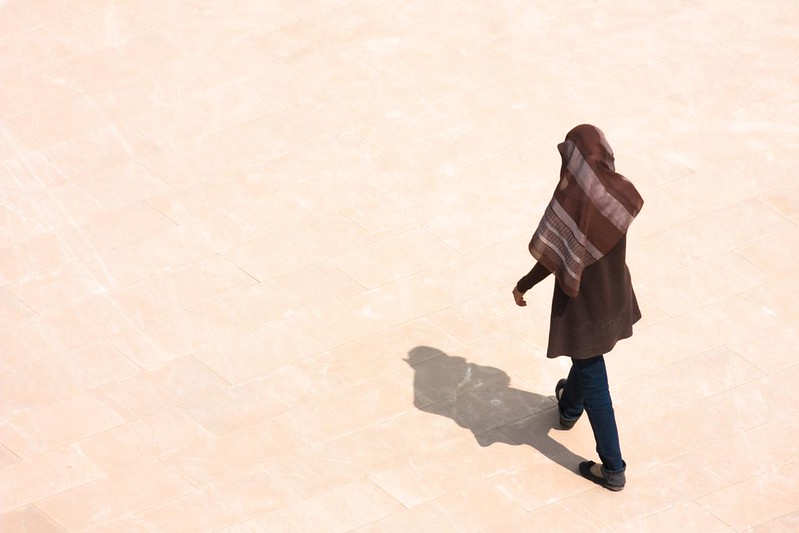
(Photo: Antonella Zarrilli)

Sarah Jawaid is Associate Editor of Altmuslimah.


4 COMMENTS ON THIS POST


Gandhiji‘s example is illustrative. He was also protecting India’s natural resources so that they could benefit the people more. If I’m not mistaken it is the reason he started to sew his own clothes - so that the cotton wouldn’t entirely be shipped abroad for manufacturing. It also demonstrates why such an earthly movement isn’t only within a woman’s domain.


Very interesting interview, thanks for sharing this. Vandana Shiva has been an inspirational hero to me.


Zeshan, is it because of the forestation issues in particular or overall because of environmental conservation and how it relates to women?


Saadia,
All of the above. I first came across her work on globalization and food supply issues. And I like what she has to say on ecofeminism.


Page 1 of 1

ADD YOUR COMMENT
You must be logged in to leave comments.

Produced in
partnership with

Founder & Editor-In-Chief
Asma T. Uddin

Executive Editor
Zahed Amanullah

Publisher
Shahed Amanullah

Associate Editors
Sarah Jawaid
Anjum Malkana
Zehra Rizavi

Multimedia Editor
Fatima Bahloul

Contributing Editors
Fatemeh Fakhraie
Abbas Jaffer

Events and Publicity
Shazia Riaz

Support Altmuslimah


Search altmuslimah


Subscribe to newsletter and feeds


See more of Altmuslimah's photographic campaign

NISI Fashion (Anisa Noormohamed , April 10, 2010)
Episode Four: Headscarf (Crystal Quallo, March 19, 2010)
Fashion Week: Malaysia (Vincent Thian/AP Photo, November 15, 2009)


News briefs for week of August 23, 2010 - This week, A Bangladesh court ruled that people cannot be forced to wear religious clothing, a youth organization in Massachusetts urges officials for more comprehensive cultural sensitivity training of teachers, Emirati women frequent hair salons less during the month of Ramadan, and the Christian Science Monitor describes the pro-women's rights stance of one of the leaders behind the proposed Islamic center near ground zero. (August 24, 2010) (0 comments)

News briefs for week of August 16, 2010 - This week, the government of Afghanistan releases statistics on alarmingly high suicide attempt rates by Afghan women, and an Islamic theologian recounts his experience on a nudist beach that led to his conversion to Islam. (August 17, 2010) (0 comments)

Ramadan: A wife’s perspective (and a husband’s) - When my husband finally makes his way down the stairs, my frustration abates and he and I sit across from each other and share our early morning meal. We speak intermittently and keep one eye trained on the clock to ensure we finish our food by the time dawn prayers begin. Despite the sparse conversation and the hurried meal, I enjoy the feeling that we are both beginning our obligatory fasts together, as a unit. (August 13, 2010) (1 comment)

News briefs for week of August 9, 2010 - This week in the news, why pregnant women exempt from fasting still fast, Taliban responds to TIME's cover story on Aisha, Satirist claims he is not joking about his plans to open an Islamic gay bar next to Cordoba Mosque, and a young American Muslim man abstains from alcohol and dating for the month of Ramadan. (August 10, 2010) (0 comments)

News briefs for week of August 2, 2010 - Brazil offers asylum to Iranian women sentenced to death by stoning, veiled women pass through Canadian airport checkpoint without being checked, Malaysian reality show crowns its champion imam, and a few British gay Muslims find support from their local imams. (August 3, 2010) (0 comments)

News Briefs for the week of July 24, 2010 - This week, Saudi clerics seek more Muslim maids and say its okay for women to uncover their faces in the presence of burqa bans. Two French women in burqinis were refused entry into a pool, and two Muslim women in England are not allowed onto a public bus. (July 27, 2010) (0 comments)

Intern Icon

Founder & Editor-In-Chief
Asma T. Uddin

Executive Editor
Zahed Amanullah

Publisher
Shahed Amanullah

Associate Editors
Sarah Jawaid
Anjum Malkana
Zehra Rizavi

Multimedia Editor
Fatima Bahloul

Contributing Editors
Fatemeh Fakhraie
Abbas Jaffer
Events and Publicity
Shazia Riaz
Our mission | Our partners| In the news | Contact us | Submit an article | Advertising