Thursday, March 11, 2010 | 26 Rabi al-Awwal 1431  
GENDER SEGREGATION
Separation not segregation: a Muslim woman writes

Gender separation is not inherently sexist. We have single sex toilets, stag do's and hen nights, boys nights out and Anne Summers party nights in, as well as single sex schools, monasteries and convents.
Every culture has places and occasions where men and women find themselves congregating towards each other through custom, nature or by design.

I'm deliberately not using the word segregation - a word that carries far too much baggage with its connection to apartheid in South Africa, and the Civil Rights movement in the US. For segregation was premised on a lesser value being placed on those who were being segregated away, and that lesser value meant that they were deserving of less opportunity, respect and participation.

Separation in itself is not discriminatory because in theory - we'll come on to talk about practice in a moment - it treats both genders equally. In the theory of separation men and women have equal respect and rights, equal access to opportunity and resource, but are also given the space to flourish or relax in a single sex environment.

India Knight wrote beautifully about how our culture has many moments of joy where men hang out with men, and women with women, and that we have no need to be in a mixed sex environment all the time.

The separation of the sexes is always a hot topic for debate. It was always widely held that both boys and girls gained better results in single sex education.

Boys and girls are more likely to take a wider range of school subjects including those which are not considered 'typical' of their gender when in separate schools - girls taking more sciences and boys taking more arts - and more likely to go onto careers less typical of their gender and more suited to their talents.

Women educated in single sex schools also go onto earn more money.

In the working world the policy was always to encourage women to broaden their choice of professions out of the usually 'women's professions' and get more men involved in things considered feminine.

In a recent study by the University of Cambridge, amongst a sample of 20 countries, those which have more occupations dominated by one sex have more equality in pay between the sexes overall, contradicting assumptions about the advantages of bringing men into traditionally women-dominated occupations and women into male-dominated occupations.

These examples are not to distract us from the topic in hand, nor to discuss the methodologies or accuracy of their findings and not even to suggest they are directly comparable to the issue we are about to discuss.

Rather they should set the landscape to a more sophisticated debate on separation and illustrate two points.

First, that this is a nuanced topic with many complexities.

There is no simple right or wrong to policy and execution and the issue of separation permeates all aspects of society.

Second, this issue of separation is not limited to "Muslim weddings bad" as an MP raised last month.

Jim Fitzpatrick MP for Poplar and Canning town, which has a large Muslim population, was invited to a Muslim wedding but on arrival, finding that the men and women were to be seated separately, decided to leave, and tell the press about it.

I wrote about it at the time, disappointed that he was rude enough to make a fuss about a private matter, and surprised that he was ignorant that many Muslim weddings are separated, in both the UK and around the world, and have been as far back as I can remember.

Gender separation definitely is discriminatory when it normalises male behaviour as the "baseline" and the male side robs the female side of the equation of access, agency and participation.

This is an extremely problematic area in the Muslim community.

Let's for the moment assume that there is no intent to discriminate, but that Muslims feel as though creating a physical boundary for gender separation is in line with Islamic principles.

Even from this starting point, even those Muslims who support it must acknowledge the reality that the physical arrangements exclude and diminish women's participation simply because of the arrangement of physical space and location.

Those "holding the microphone" have control "from the men's side" and it becomes a kerfuffle to make even a comment from the women's side. This is not about social occasions of enjoyment like weddings, but serious civic institutions where decisions about the life of the community and its future take place.

Sometimes women aren't even invited or told they "don't need to be there".

Herein are the clues which are more revealing about what really lies beneath. Sometimes the sound system is poor, there is no visual, or women are not even in the same room or building. The rooms are smaller, dank, poorly ventilated, or hurriedly found to plonk the women into.

Those Muslim men who don't believe me should perhaps investigate these rooms for themselves.

Not all mosques are like this - the ones I attend have seating in the same room, or separate rooms but with excellent facilities for both men and women.

When the less favourable locations are challenged about the lack of facilities for women they say that there isn't enough space to fit the men and women, or the women prefer to stay at home, or so on.

This makes it apparent that it is the same gender discriminatory attitudes that are often prevalent in wider society rearing their ugly heads here, but hiding behind the false statement that it is religiously "required" separation that makes it so.

I don't buy it.

If it was important to have women there, if it was a natural instinct to include women as Islam dictates, then space would automatically be found.

The separation can cause other problems too if not carefully patrolled - women become anonymous and indistinguishable. When events are reviewed, their presence and participation is unrecorded. And of course their talents remain untapped for the benefit of the community, which is a great loss. Participation in the running and management of a community is then denied to women - when it never was in Islamic history.

In Islamic thinking, separation stems from the importance placed on modesty in public - this covers modest clothing (for men and women), modest behaviour (for men and women) and humility (for men and women). In a society which has sexualised almost every aspect of life this can appear a stark contrast or possibly even austere. But for many Muslims the call for modesty is actually a relief from adverts that hallucinate naked men and women in supermarkets after wearing certain deodorants, or the constant debates about body images of female celebrities (she looks like a pre-pubescent child vs. she's put on a few pounds on holiday).

The debate on Muslim dress almost always seems to be hijacked by notions that men are uncontrollable lust-monsters who would ravage a woman as look at her, and that women are nothing but sexual objects that need such extreme protection that they can't be in the same room.

Frankly I find the former insulting on behalf of men, and the latter infantilising and patronising on behalf of women.

By instituting a physical separation as the vessel for modesty-management the responsibility for modesty is devolved to the physical partition rather than necessarily imbuing the men and women with the social graces of modesty and respect in the way that they interact with each other.

Personally, I believe that there is a time and place for separation, and a time and place where a cohesive participation is required. In either scenario it is the behaviour that is primary, for me the physical separation is simply about allowing a space for both men and women to unwind, relax or flourish - as with all the examples I quoted at the beginning.

Those who insist on separation as a requirement of religious law in order to exclude women's participation are actually hiding prejudice behind the law.

For law is always a product of the values and ethos of a community - the law serves a community's vision rather than dictating how the community should behave. And the Islamic ethos is that men and women are equal creations, that have equal value and equal responsibility in the life of the community.

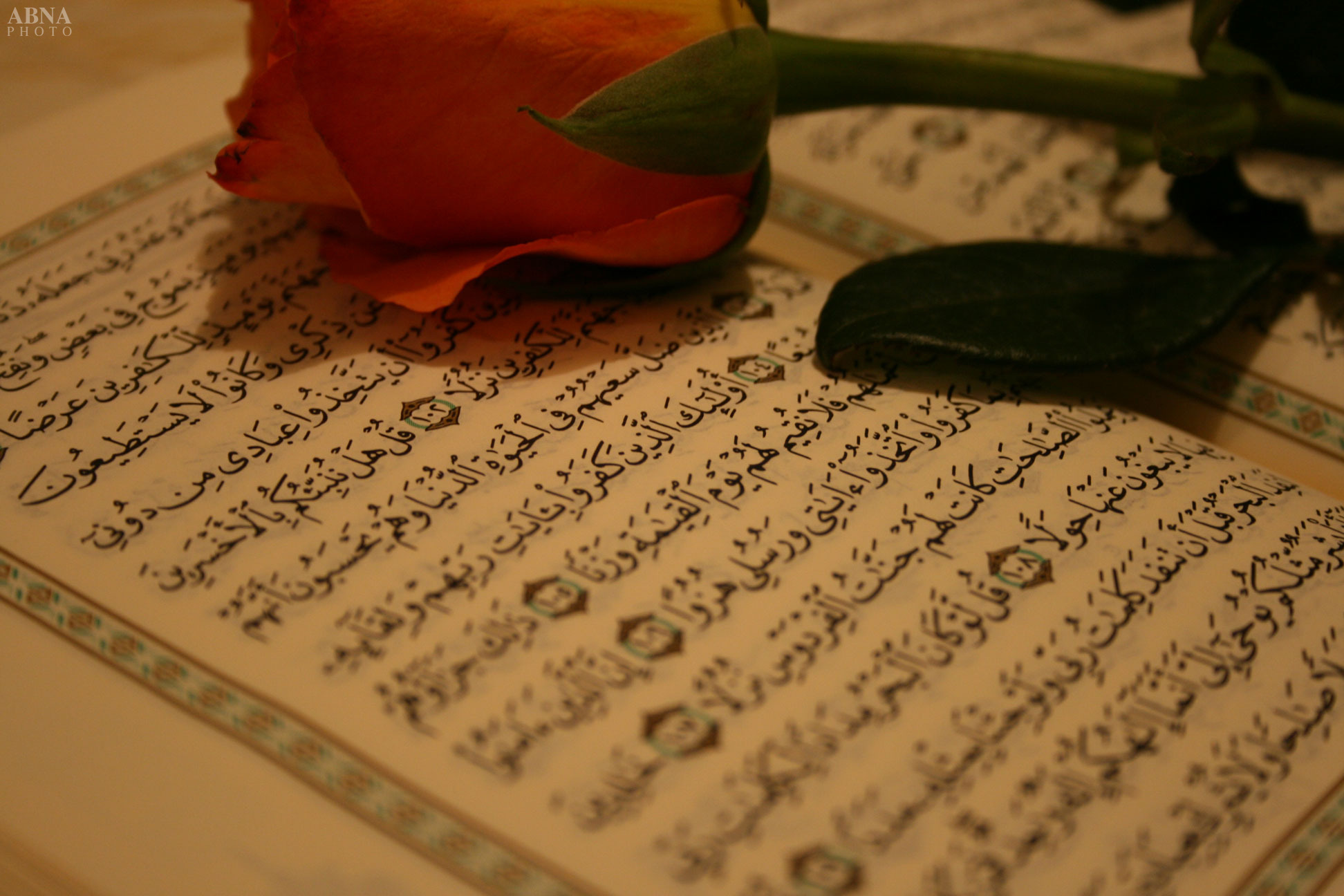
The Koran talks about men and women being equal "garments for each other" and "finding peace and tranquility" in each other.

Those who wish to uphold physical separation, as well as those who want to make clear that separation is not discriminatory, must make extra efforts to eradicate the difficulties of access and participation that usually come for the women. They need to make doubly sure that resources and respect are fully provided so that women can be fully functioning and valued members of society. It's a bit like thinking of the Yin-Yang symbol in representing the male and the female. They interact with each other, but don't need to be constantly mixed up or in each other's pockets. Neither can one be completely excluded.

When you get the balance and the interaction right you achieve a fully functioning whole.

Shelina Zahra Janmohamed is author of the book Love in a Headscarf and writes at the Brass Crescent award-winning blog Spirit21. This article was previously published at Time Online and is reprinted here with permission of the author.


7 COMMENTS ON THIS POST


I find it difficult to sympathize with women who want separation and then expect equal access to the public sphere or equal treatment in private / mosque (is the mosque public or private??). I just don’t see that working out in practice that much, so little that I basically doubt it can actually happen.

My first reaction to this article was visceral, as in “They want to stay away from us as men, fiiiiine; let’s go back to patriarchy then, too!“ I’m not quite sure why I felt that way. Perhaps I’m somewhat offended that women feel they must flee men’s presence to be all they can be. Perhaps its because after so many years of women invading men’s spaces, that it seems disingenious and self-serving for women to now demand thier own private male-free spaces when as a man I have almost nowhere I can go without some woman insisting she has a right to demasculinize and effeminize our space and indeed our beings: Naval vessels, combat units, devaluation of masculine traits, etc etc…


Oh goody. More beleaguered masculinity. Boo hoo.


Especially since the gentleman above wants separation as well - and I’m assuming wants equal treatment too. If it’s good for the goose ...


I am a white American woman who attended a religious all-girls school after my life and reputation were unfairly destroyed early on in public schools. I truly believe that going to that school saved my life, built my confidence back up, and allowed me to become a serious student with a bright future. There are times in everyone’s life where one needs to be shielded from the judgment and distraction of the opposite sex.

Public participation and civic engagement are not one of those times, and places that stifle women’s voices in the public sphere will continue to become more and more irrelevant and obsolete as our humanity continues to evolve.

However I think we would do a disservice to humanity if we didn’t offer the haven of single-sex environments in some aspects of culture. The problem is there are no hard and fast rule for when it is appropriate, so it will always rely on the collective intelligence of the community.


Reading this article, I could not help but reflect on the separation of the sexes at Masjid al-Haram.  Before I performed Umrah, I envisioned this peaceful experience in which men and women stood side by side in front of the Kaaba to praise their Lord. Wrong!

The masjid’s main floor, where the Kaaba is, looks something like this, even though statistically women account for half the ummah.

http://www.muslimahwritersalliance.com/MWA-GMEA4W/Press-Release.html

If you want to touch the black stone, be ready to loose your dignity in the process!

I still recall being “shoved and pushed” out of my prayer, and told to leave to the back rows by one of the male guardians.

As for the US mosque experience… I’ve heard brothers ask sisters to send their questions in writing (i.e. paper airplanes, carrying important questions that may or may not be read), because their voice is considered “awrah”.  Never have I come across a seerah story that actually depicts Aysha (ra) or other female companions writing their opinions down before passing them on to male companions.


what she said—>  prettymuliebrity


> Gender separation is not inherently sexist. We have single sex toilets

Excuse me, you’re drawing an analogy between mosques and toilets? That is just… degraded.


Page 1 of 1

ADD YOUR COMMENT
You must be logged in to leave comments.

Produced in
partnership with
See more of Altmuslimah's photographic campaign
Search altmuslimah


Subscribe to newsletter and feeds


Multimedia

Fashion Week: Malaysia (Vincent Thian/AP Photo, November 15, 2009)
iCover (Sadaf Syed, November 15, 2009)
Journeying through Oman (Lucy Marryat & Yoshi (Yusuf Misdaq), October 19, 2009)

Editors' blog

Conceptions of sexuality among American Muslim women - Ten AltMuslimah members/readers gathered on Sunday, February 21, 2010, with the goal of discussing the nature of Muslim women’s sexuality, and how American Muslim women’s social needs may be different. Whether formal or casual, the group agreed in the value of women’s support networks, especially considering the rising prevalence of domestic violence in our communities. A quick brainstorm of ideas brought up the possibility of periodic casual women’s nights, which are actually common in more active American Muslim communities. (March 1, 2010) (1 comment)

News briefs for week of March 1, 2010 - This week Washington, D.C. women storm the men’s section of a local mosque, a women in hijab is fired from her retail position in California, a women’s terrorist group is said to be uncovered in Egypt, Malaysia looks to hold a conference on women’s caning, Pakistani women’s clothing is highlighted, and Iran’s first female Olympic skier is profiled. (March 1, 2010) (0 comments)

News briefs for week of February 22, 2010 - Saudi religious police crackdown on Valentine's Day merchandise, Three Malaysian women are caned for extramarital sex, Saudi to permit female lawyers to argue cases, New Jersey Muslim man throws baby over a bridge, and Baltimore sixth-graders go on a field trip to an Islamic center. (February 22, 2010) (0 comments)

News briefs for week of February 15, 2010 - This week, death threats for dehijabing in Spain, a ballet showcasing Muslim women’s historical accomplishments, France continues the burqa ban debate, a Pakistani woman is recognized in California, Muslim scholars question full-body scanning and Obama names an envoy to the Muslim world. (February 15, 2010) (0 comments)

News briefs for week of February 8, 2010 - This week, a study finds that abstinence-focused sex education in American schools can persuade youth to delay sexual activity, sixteen-year-old Turkish girl buried alive for talking to boys, French authorities deny citizenship to man who forces his wife to wear a full veil, and female government leaders have done little to advance women's rights in Southeast and South Asia. (February 8, 2010) (2 comments)

News briefs for week of February 1, 2010 - This week stress on female virginity is put on blast, a women’s rights book is allowed onto Malaysian shelves, and the burqa debate continues in France and Denmark. (February 1, 2010) (0 comments)

Readers' blog

Will you be my (halal) Valentine? - Why does Valentine’s Day spark such contentious debate among American Muslims across blogs and social networking sites? What underlying emotional buttons does this commercialized cultural holiday push among American Muslims? While other holidays, such as Mother’s Day and Father’s Day, generate a few tired and tepid discussions centered around the idea that “everyday should be Mother’s and Father’s Day,” Valentine’s Day, like the very concept of romantic love it celebrates, generates much more passionate responses. These debates touch on many topics including what love means or should mean to Muslims, the relationship between culture and religion, and the current state of romantic relationships among Muslims. (February 22, 2010) (1 comment)

Living up to the legacy - By historical account, being a Muslim female meant being virtuous, loving, knowledgeable, and empowered by her faith. Well it’s centuries later and although we cite to the legacy of Islam, we fail to live up to it or keep the legacy alive. (February 4, 2010) (1 comment)

Bridging literacy and cultural gaps in Pakistan - In addition to bridging cultural and socioeconomic gaps, the American International School System in Pakistan acts as an experimental model and incubator by incorporating some of the education reform principles advocated by grassroots organizations, education specialists and writers, and governmental agencies like the Ministry of Education. (January 3, 2010) (1 comment)

Islam and manhood - The infamy of Islamist terrorism over the past decade has created an image of the Muslim man as intrinsically prone to violent behavior, even if directed toward the self rather than the other. The image of the angry, flag-burning, chanting Muslim man has come to symbolize male violence. However the photos fail to explain that, firstly, the anger, in many instances, is justified, secondly, that the chants rarely spill over into to physical violence, and thirdly that violence is not exclusive to Muslim men. (December 25, 2009) (5 comments)

It’s not about the niqab, it’s about credibility - The question, which we all should consider now is why Al-Azhar scholars are not obeyed by the public any more? The simple and direct answer to this very complicated question is because Al-Azhar lost its credibility in the eyes of Egyptians. (October 17, 2009) (4 comments)

One woman’s journey toward pleasing Allah - Understanding the purpose and reasoning behind abaya is not something a Muslim girl learns the day she is born. For many, like myself, it was a slow and steady journey; one that required much research and reflection. (September 25, 2009) (4 comments)

Founder & Editor-In-Chief
Asma T. Uddin

Executive Editor
Zahed Amanullah

Publisher
Shahed Amanullah

Associate Editors
Fatima Bahloul
Rabea Chaudhry
Fatemeh Fakhraie
Abbas Jaffer
Sarah Juwaid
Anjum Malkana
Enith Morillo
Shazia Riaz
Zehra Rizavi

Contributors
Uzma Mariam Ahmed
Fatima Ayub
Jack Fairweather
Hussein Rashid
Sarah Uddin
Rahilla Zafar
Rafia Zakaria
Our mission | Our partners| In the news | Contact us | Submit an article | Advertising