
|
|  |
By Uzma Mariam Ahmed, April 30, 2009
As much as we'd like to deny it, sex trafficking and forced prostitution of women and children is rampant in the Muslim world - in large part because Muslim men demand these services. The fear of discussing sexual relationships openly and constructively may explain the unwillingness to rout out these evils. What will break the silence?
|
|
During my final year in law school, I represented a young woman from the Islamic Republic of Mauritania who was seeking asylum. She was born in Mauritania to a slave mother, separated from her family at a young age and sold and then re-sold to owners who tortured and raped her. She was ultimately forced into prostitution and then trafficked to several other African countries before entering the United States. She was Muslim.
As I began doing research for her case, I discovered that sexual abuse of women and children is rampant in the Muslim world. Muslim women and children are trafficked and sold into prostitution in countries including Pakistan, Bangladesh, Iran, United Arab Emirates, and Saudi Arabia. Every day, approximately 800,000 people are trafficked across national borders, which does not include millions trafficked within their own countries, and approximately 80 percent of the transnational victims are female and up to 50 percent are minors.
Sex trafficking has a devastating impact on its victims, who suffer repeated rape, physical and emotional abuse, threats against self and family, sexually transmitted diseases including HIV/AIDS, and even death. The victims of sex trafficking are routinely either lured away from their families with promises of non-existent jobs or marriages, sold by family members, or are kidnapped outright. They are often drugged, imprisoned and tortured if they attempt to escape, and many who do manage to return to their families are turned away because of the stigma attached to sex trafficking and prostitution.
As I worked further on my Mauritanian client’s case and read and thought more about sex trafficking in the Muslim world, I also realized that there is a deafening silence in the Muslim world with regards to this issue. This is both tragic and puzzling. After all, isn’t every core principle of Islam violated by sex trafficking? Islam provides that sexual relations should only exist within the confines of a legitimate marriage, and has laid out strict penalties for adultery and fornication. Furthermore, Islam mandates the freedom, dignity, and rights of women and children. Muslims are commanded to stand up against injustice: “O ye who believe! stand out firmly for justice, as witnesses to Allah, even as against yourselves, or your parents, or your kin, and whether it be (against) rich or poor: for Allah can best protect both.” (4:135).
It is hard to imagine a greater injustice than sex trafficking and forced prostitution, and it stands to reason that Muslims in countries like Pakistan, Saudi Arabia, and Iran should be outraged that such crimes exists within their communities. After all, if Muslims can get angry enough to cause blood-shed over Danish cartoons and teddy bears named Muhammad, they should be completely enraged by the selling of Muslim (and non-Muslim) women and children into sexual slavery and prostitution.
Unfortunately, such is not the case. In the U.S. Department of State’s 2008 “Trafficking in Persons Report,” not a single Muslim country is included in Tier 1, which includes the countries that comply with minimal standards for the elimination of trafficking. Muslim governments are often part of the problem. In Pakistan, for example, prostitution is illegal, but police generally ignore the activity if they receive bribes. In Saudi Arabia, women from Pakistan, Yemen, Nigeria, and other countries are routinely trafficked for sexual exploitation, and others are kidnapped and forced into prostitution after running away from abusive employers. Nonetheless, Saudi Arabia lacks adequate anti-trafficking laws, does not criminally prosecute the traffickers or customers, and takes no steps to provide victims of sex trafficking with protection. Women in Iran are trafficked internally for forced prostitution and forced marriages to settle debts, and also trafficked to neighboring Muslim countries for sexual exploitation. Iranian authorities purportedly punish victims of trafficking with beatings, imprisonment, and execution. Clearly, there is no shortage of the atrocities being committed against these Muslim women, and the governments of Muslim countries are either ignoring the issue or complicit in the trafficking.
What explains the Muslim world’s unwillingness to rout out the evil of sex trafficking and forced prostitution? There are many reasons – apathy, fear of acknowledging that the ideal framework created for governing sexual behavior is not so ideal in practice, antipathy towards the victims of these crimes, and denial. I think one of the biggest reasons for this silence is the modern Muslim world’s fear of discussing sexual relationships openly and constructively. The subject of sex trafficking and forced prostitution is particularly taboo. Try to think of the last time you sat in a room full of older Muslim relatives or friends and brought up the topic of prostitution. Have trouble imagining the conversation? So do I.
This collective repression regarding discussion of topics related to sexual relationships is not rooted in Islamic tradition. Numerous hadith document that the Prophet and his companions were very comfortable discussing both sex and sexual problems within the community. Both men and women reportedly approached the Prophet to discuss the details of their physical and intimate problems, and he readily provided advice regarding these issues. The modern-day Muslim prudishness is therefore more culturally rooted, and likely a by-product of colonial rule and left-over vestiges of Victorian sensibilities.
While it is neither desirable nor necessary to discuss the details of a couple’s intimate life publicly, it is problematic when this unwillingness extends also to discussions of family planning issues, sexually transmitted diseases and sexual abuse, among others. Notwithstanding our community’s treatment of these topics as being shameful and embarrassing, the fact remains that sex is a basic human need. When it becomes something to hide, it naturally leads towards the potential of deviance and abuse. Prostitution and sex trafficking only exist in Muslim countries because Muslim men demand these services.
This social ban on discussions related to sexual relationships particularly extends to sex trafficking and prostitution. Because such things are so shocking and terrible and surrounded by an aura of illicitness, it seems we have decided the best course is to remain silent about them. To discuss them has become taboo, and the victims of these crimes have been relegated to invisibility. This very taboo, this invisibility, is a key driver in allowing sex trafficking and prostitution to thrive in Muslim countries. We need to break this silence and speak seriously and urgently about these problems, so that the men responsible for these crimes stop benefiting from our repression, and so the victims can finally gain a voice.
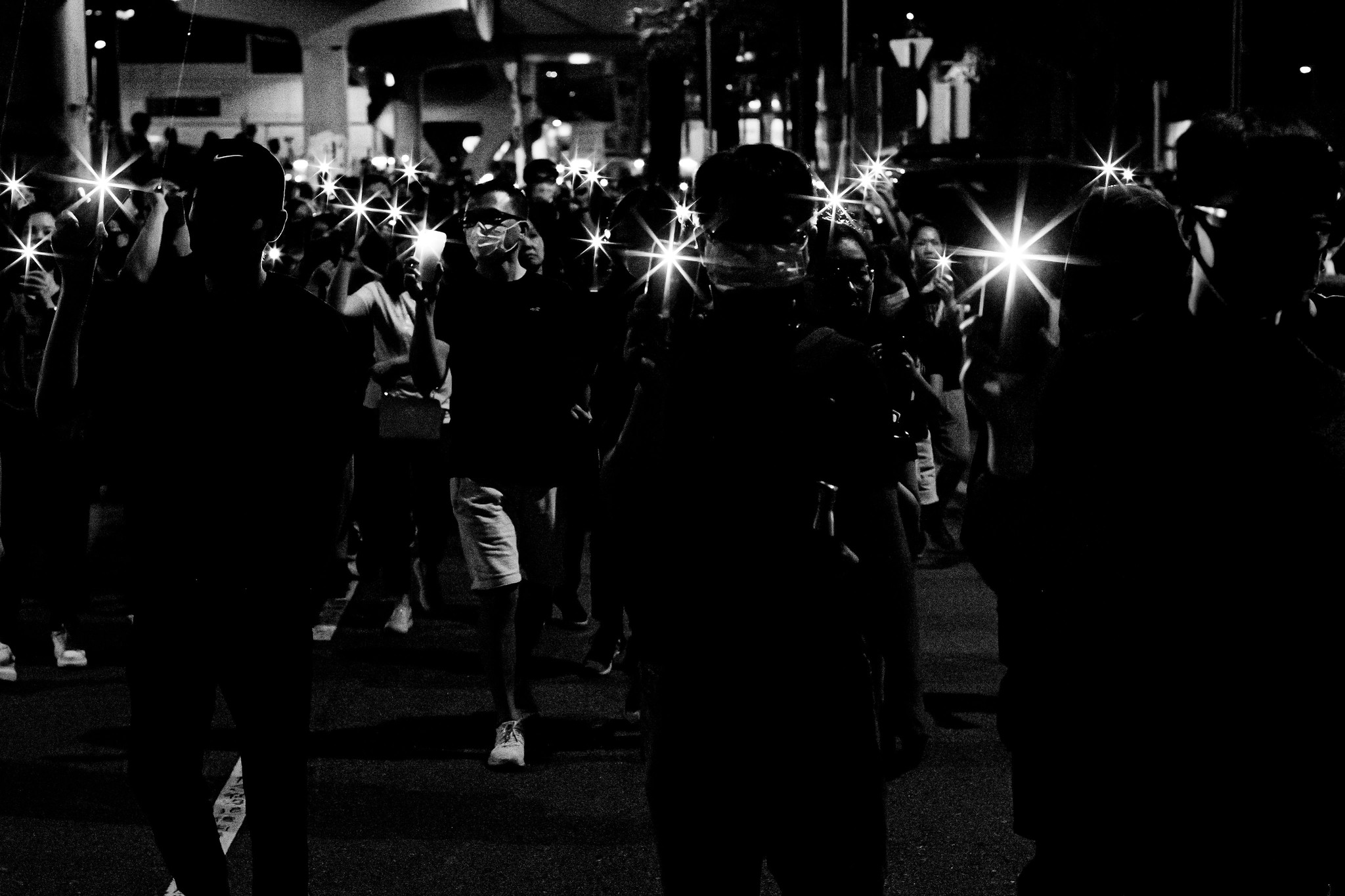
(This article is part of an Altmuslimah series on sex trafficking in the Muslim world. Photo: Nick Rain via flickr under a Creative Commons license.)Uzma Mariam Ahmed is an attorney in Chicago and works at a large national law firm, where she focuses her practice primarily on securities and commodities regulation. Mariam has helped many clients seek asylum and other immigration relief under the Violence Against Women Act on a pro bono basis. She graduated from Northwestern University's School of Law in 2005.
16 COMMENTS ON THIS ARTICLE
We try to remove any comments that do not conform to our netiquette guidelines. If any comments remain that are in violation, please let us know. The presence of offending comments does not necessarily reflect the views of the editors of altmuslimah.com
Well done. Although I also believe that being able to talk about sexuality and prostitution openly would be a step in the right direction I think the real problem is not our inability to talk about such things, but rather the misogyny that exists all around the world, including in the Muslim world. The men in power actually don’t care about these women, or any women really. Prostitution benefits men and thus it will continue to exist as long as men hold views which deem women as inferior beings created mainly for the sexual pleasure of men. It is these views and attitudes toward women that the men in power hold which need to be changed.
- Posted by Sobia on April 30, 2009 at 01:51 PM
I agree there is not enough accountability for this issue, or even lesser sexual crimes, among those in power in Muslim countries. Some of the stories are devastating, such as what happens to girls in Lahore’s Red Light District. But when I wrote about sex trafficking in my blog last year (with less detail) the reaction among the American Muslims who knew about was not unreasonable.
Asra Nomani has demonstrated courageous patience in writing about her lesser ordeals of having a child out of wedlock because of naivety in meeting a Pakistani man.
- Posted by Saadia on April 30, 2009 at 04:35 PM
>>if Muslims can get angry enough to cause blood-shed over Danish cartoons ... they should be completely enraged by ... sexual slavery and prostitution.
Yes, I’ve made this point many times and in many places only to receive silence, shrugs and have people turn away to instead address our sacred cows of the same old political conflicts. Is it not telling that so many khutbas I’ve heard end with, “Make the Mujahideen victorious in Palestine, Afghanistan, Kashmir, Amin!“ yet absolutely never heard anything about protecting our sisters being sold. Indeed, it is very telling and quite shameful to be a Muslim today.
- Posted by OmarG on April 30, 2009 at 09:09 PM
>>and likely a by-product of colonial rule and left-over vestiges of Victorian sensibilities.
I’ve heard this before, but have seen little evidence so far. Know of any? I could see how this would be plausible in a South Asian context, but what about other parts of the Islamic world that were never governed by a Victorian-influenced culture? Saudi, Iran, Afghanistan were never even colonized.
- Posted by OmarG on April 30, 2009 at 09:12 PM
@OmarG:
“Saudi, Iran, Afghanistan were never even colonized.“
How did the Saudi dynasty become the Saudi dynasty? The British! They appointed Saud as king thus beginning the rule of the Saud family and the creation of Saudi Arabia, instead of Arabia.
Afghanistan was created by the British. The boundaries of that country were set by the British. Afghanistan was basically created as a buffer zone between British India and Persia.
The British had their hands in all pots. And even if a country was not directly colonized, its neighbours most likely were thus affecting them as well.
- Posted by Sobia on April 30, 2009 at 09:23 PM
I find it very difficult to infer Victorian cultural influences on remote Pashtun villages. Also, Afghanistan was not created by the British. Ahmad shad Durrani carved out Afghanistan. The Afghans lost territory to the British (Peshawar among others) who then drew the Durand line which is the present-day border between Afghanistan and Pakistan. The British influenced, but by no means did they “create” Afghanistan.
Also, Saud established relations with the British and became someone they could deal with after he managed to conquer the numerous towns and tribes in Arabia. He was certainly not appointed.
My point is that not everything can be blamed on the British nor colonialism. And even if it were, its still up to us to move beyond the cruft and become something better than we were before.
- Posted by OmarG on April 30, 2009 at 10:51 PM
Great piece. Very important issue.
Sex taboos without a doubt exist and contribute to many ailments in Muslim societies. Since, unfortunately, it is deemed more shameful for women in conservative societies to engage in open and frank discussions on the topic, I think men should take the lead on heading up these conversations. Men aren’t really the victims, though, so they would lack the passion and zest to head up such campaigns in large numbers. How do we engage men to take the lead, tackle these issues, and drop the purda shrouding this very real inhumane industry?
I agree with OmarG not everything can be blamed on colonialism. OmarG, that argument is also made for skin color and the international craze for lighter pigment - any thoughts?
- Posted by Syed on May 1, 2009 at 11:14 AM
“Men aren’t really the victims, though.“
I mostly agree, but sometimes they are: One case could be if they are small child slaves, usually to other men, but sometimes not. This is the most horrible thing that could happen and yet it does, like in The Kite Runner.
Another scenario was the case of Joseph where the wife of his master seduced him. It was so obvious that she was on the chase (especially easy given her powerful wealth and status compared to his) that as he was out the door she ripped his shirt from behind. The angle at which the shirt was ripped was the test.
“Men aren’t really the victims, though, so they would lack the passion and zest to head up such campaigns in large numbers.“
The filmmakers for The Kite Runner had some trouble in Afghanistan if I remember correctly, but even still, Khaled Hosseini’s novel became an international best-seller. I don’t know that it was correlated with whether he himself was a victim. But the point is that it indicates empathy for whatever reason.
“Since, unfortunately, it is deemed more shameful for women in conservative societies to engage in open and frank discussions on the topic, I think men should take the lead on heading up these conversations.“
It should be remembered that while women may not have open-air discussions overseas, or sometimes here, many women live here their whole lives and can be open at times…like the blogger in this case. Anyone can talk about it academically and often do. Anyone can talk about another’s personal life. And what is even more outrageous is the jokes that some “aunties” make when they are by themselves…and some in public too.
The threshold for publicly hearing about these issues is often higher among the American public (with exceptions of course)and so it really depends who one is talking to (which can be confusing online like here. Who is the audience? Everyone?).
Yet as we all know, reputation is particularly sensitive among women.
However, sex trafficking isn’t a phenomenon among Muslims in the US as far as I could ever see, and there is less awareness of it. I do think aunties discuss it but what happens is indeed so shameful, underground, and hush-hush, that its not often.
So men in government must take the lead since we know from the RAND blogger that women often depend on them to protect their rights in places where they are unable to defend their own. What is particularly troubling are the laws that still exists on the books in some countries. Clearly they must be updated, even enough to reflect traditional schools of thought, and adapted to modern complexities.
What we can be discussing in relation to this is Pakistan’s laws concerning women and rape, and especially considering the Taliban’s version of Islam that is taking hold in some parts. Replacing one draconion measure with another doesn’t win support for the government’s rule.
- Posted by Saadia on May 1, 2009 at 05:48 PM
And regarding the international craze for light-skin, I think that’s not all together true. Anyone heard of international Obama fever? :)
Some countries love tans like ours and there’s a reason - because its also beautiful. We South Asians just need to be proud of whatever we have.
- Posted by Saadia on May 1, 2009 at 06:17 PM
Thank you everyone for your thoughtful and interesting comments. This piece was initially envisioned as a stand alone article that would address the general issue of sex trafficking in the Muslim world. As I began researching and writing, however, it became very clear that it would be impossible to sufficiently address the many issues that must be discussed in such an article. Asma (the editor) and I decided that we should instead structure this as a series of articles, and we made this first one the most general. It seemed very appropriate to begin a discussion by acknowledging that we don’t discuss this issue very much, and pointing out the most obvious and general reason—the taboo surrounding sex trafficking (and discussions of sex in general). I know and readily acknowledge that there are many reasons both for the existence of sex trafficking and the general silence around the issue. This article just focuses on the taboo.
I hope to do some interesting things in the follow-up articles in this series, and I would be happy to get a sense of what topics people would like to read about (and of course, argue over!).
- Posted by uma1 on May 3, 2009 at 11:19 AM
While the inability to address social ills publicly no doubt plays a role in keeping the sex trade flourishing, I am not convinced that this is the leading or even one of the leading causes or contributing factors to sex trafficking.
Sex trafficking is not unique to the Muslim world. Cambodia and Thailand see some of the worst excesses of sex trafficking, with high numbers of children trafficked into the trade, but neither are Muslim-majority countries. What all countries with a sex trafficking problem have in common is weak states and fluid borders, as the author points out. As with narcotics, the illicitness drives the profitability, and weak institutions (police, customs, courts) ensure that the problem goes unregulated.
At the end of the day, Muslims are no different from other humans, and humans have been commodifying sex since the beginning of time. In traditional societies, where women are still seen as property, sex trafficking seems to me a logical outgrowth of this attitude.
Uzma,
You bring an important issue to our attention, the plight of a people utterly oppressed and often ignored. I applaud you in your effort to raise awareness of the injustice of sex trafficking and prostitution and hope that you succeed in this.
However, a couple point are in order. Even in societies where sex is not taboo, like ours, discussing prostitution and sex trafficking still isn’t exactly a topic for polite discussion. So perhaps there isn’t a direct relationship between openness about sex and openness about its abuses. This is point number one.
Point two: you say, “Prostitution and sex trafficking only exist in Muslim countries because Muslim men demand these services.“ This to me seems the equivalent of saying that “the Occupation in Iraq only exists because White people (Americans, British and whoever else) demand exploitation of Iraqi people.“ Doesn’t this sort of explanation strike you as being over simplistic to the point of being offensive, particularly if you were a white person? And so how is it any different to the explanation that you offer?
This sort of language seems to me more appropriate to that of radical revolutionaries: marxists, anti-colonialists, radical islamists, feminists. It’s the other who is responsible for my oppression, and so its the other that should be fought tooth and nail. Perhaps there are contexts where this is appropriate. But using such language in our present American contexts where we already suffer such strained gender relations between muslim men and women seems unproductive.
What happened to the Qur’anic principle of “No soul should bear the burden of another?“ What this demands is appropriate qualification and caution when we appropriate blame for a particular social ill or injustice. Not doing so may only be more counter-productive.
Hello Mohammed,
Thank you for your interesting comments. One, I agree with you that these issues are not discussed openly in most societies, since people often prefer to ignore the situation of the most oppressed. My point is that in many Muslim societies, one of the reasons for the silence is the taboo regarding discussions of sex-related topics. We hope to have many more articles in this series dealing with other aspects of this problem, but it seemed appropriate to launch the series with a discussion of why we don’t discuss this problem more often.
Second, I do not find your allegedly equivalent statement to be analgous to my statement. There are many reasons why there was a war in Iraq and many reasons for the current occupation. However, the only reason why commercial sex (forced and voluntary) is offered is because there is economic demand for it, and presumably in most Muslim countries the demand is coming from men.
Neither do I think it is language that “radical revolutionaries” would use. However, if you really believe feminists are radical revolutionaries, then perhaps you may have a point, and you have me pegged.
I think the statement I’ve made is straightforward and logical. I don’t believe it is necessary to parse words to hide a truth that some people may find offensive but which I believe to be obvious.
Again, thank you for sharing your thoughts.
Regards,
U. Mariam Ahmed
- Posted by uma1 on May 9, 2009 at 05:20 PM
Prostitution and sex-trafficking exist because there is an economic demand for it. It’s obvious because its tautological. But I think there is more to it than this.
The mantra of Muslims these days is to ask the greater public to refrain from using a minority of “bad apples” to characterize the majority. When you say that prostitution exists only because Muslim men demand it, it seems to me like an indictment of the whole for the actions of a few. Some Muslim men may demand it, but others oppose it and act against it. But perhaps, as you say, this is parsing words to hide an obvious but offensive truth.
As for feminists, I should have offered the qualification that I demand of you. I think there was a stream of feminism that was quite revolutionary and radical, the second wave feminism of dworkin and freidan. This was the sort of feminism I was referring to, and I indeed think its both radical and revolutionary.
I think the idea is that so few people speak out against what ails their own societies, but a lot of that is also because its very underground and people here are not exposed to it. But overseas, people in power could do more to eradicate these ills.
- Posted by Saadia on May 10, 2009 at 04:52 PM
“I think the statement I’ve made is straightforward and logical. I don’t believe it is necessary to parse words to hide a truth that some people may find offensive but which I believe to be obvious.“
Mariam, there definately needs to be some sort of change in order to address trafficking and it must be broad-based and shared among parties. I don’t think there is anything radical about saying that and I don’t think you should have to parse your words.
- Posted by Saadia on May 11, 2009 at 11:25 AM
Page 1 of 1
ADD YOUR COMMENT
|
|
|
|
Produced in partnership with
|
|
|
|
|
|
Search altmuslimah
|
|
Subscribe to newsletter and feeds
|
Multimedia 
|
Editors' blog 
News briefs for week of February 8, 2010 - This week, a study finds that abstinence-focused sex education in American schools can persuade youth to delay sexual activity, sixteen-year-old Turkish girl buried alive for talking to boys, French authorities deny citizenship to man who forces his wife to wear a full veil, and female government leaders have done little to advance women's rights in Southeast and South Asia. (February 8, 2010)  ( 2 comments) |
News briefs for week of January 25, 2010 - This week, Muzzammil Hassan changes his defense and says he was the victim; Pakistani scientist Aafia Siddiqui is on trial in New York for shooting at U.S. officials while in custody in Afghanistan; a limited burqa ban in France may be easier to pass on the grounds of security than a total ban; and a Malaysian court ends the ban of book on challenges facing Muslim women. (January 27, 2010)  ( 0 comments) |
News briefs for week of January 18, 2010 - This week, the burqa ban discussion continues in France, attempts to outlaw hair straightening are rejected in Indonesia, FGM finds new opponents in Mauritania, and Hamas’s Islamic veil project is highlighted. (January 19, 2010)  ( 0 comments) |
News briefs for week of January 11, 2010 - This week, a €700 fine for burka clad women to be voted on in France, Coptic girls continue to be kidnapped and converted to Islam, a battered women's shelter provides refuge for Muslims in Baltimore, the culprits who maimed a Pakistani woman receive unusual and severe sentences, and world religions play a key role in the oppression and liberation of women according to the Elders. (January 12, 2010)  ( 0 comments) |
News briefs for week of January 4th, 2010 - This week, violence against women in Gaza is highlighted along with a Canadian Muslim women calendar. Muslim punk music and niqab bans continue to ruffle feathers and a Chinese professor speaks out about the Uighur, predominantly Muslim, minority. (January 5, 2010)  ( 0 comments) |
|
Readers' blog 
Living up to the legacy - By historical account, being a Muslim female meant being virtuous, loving, knowledgeable, and empowered by her faith. Well it’s centuries later and although we cite to the legacy of Islam, we fail to live up to it or keep the legacy alive. (February 4, 2010)  ( 1 comment) |
Bridging literacy and cultural gaps in Pakistan - In addition to bridging cultural and socioeconomic gaps, the American International School System in Pakistan acts as an experimental model and incubator by incorporating some of the education reform principles advocated by grassroots organizations, education specialists and writers, and governmental agencies like the Ministry of Education. (January 3, 2010)  ( 1 comment) |
Islam and manhood - The infamy of Islamist terrorism over the past decade has created an image of the Muslim man as intrinsically prone to violent behavior, even if directed toward the self rather than the other. The image of the angry, flag-burning, chanting Muslim man has come to symbolize male violence. However the photos fail to explain that, firstly, the anger, in many instances, is justified, secondly, that the chants rarely spill over into to physical violence, and thirdly that violence is not exclusive to Muslim men. (December 25, 2009)  ( 4 comments) |
It’s not about the niqab, it’s about credibility - The question, which we all should consider now is why Al-Azhar scholars are not obeyed by the public any more? The simple and direct answer to this very complicated question is because Al-Azhar lost its credibility in the eyes of Egyptians. (October 17, 2009)  ( 3 comments) |
One woman’s journey toward pleasing Allah - Understanding the purpose and reasoning behind abaya is not something a Muslim girl learns the day she is born. For many, like myself, it was a slow and steady journey; one that required much research and reflection. (September 25, 2009)  ( 3 comments) |
Separation not segregation: a Muslim woman writes - By instituting a physical separation as the vessel for modesty-management the responsibility for modesty is devolved to the physical partition rather than necessarily imbuing the men and women with the social graces of modesty and respect in the way that they interact with each other. (September 24, 2009)  ( 5 comments) |
|
|