
Ṭabarī remains the scholar everyone loves to quote and invoke. Ṭabarī’s tafsīr is considered one of the greats, and academic giants like al-Qurṭubī (d. 1272) relied on this text as a basis for their own works. But Ṭabarī borrowed a lot from the writers who came before him, in particular an expert on grammar named Abū Zakaria Yaḥyā ibn Ziyād al-Farrā’ (d. 826). So, although you assumed I was going to launch into a snide diatribe about the evils of beauty pageants, I really want to discuss Arabic grammar.
Sisters! Know this: In fighting for intellectual space within our religion, we cannot pay enough attention to grammar. Take it as an axiom, embroider it on a pillow, or tattoo it on a discreetly-covered limb: T he believer with the best grammar wins. I’m talking about winning liberation from erroneous and oppressive interpretations, winning room to breathe, think and soar.
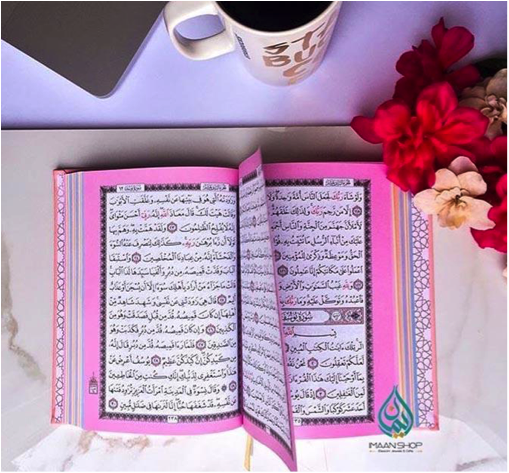
Scholars began to pore over the language of the Qur’ān when it became evident that there were differences of opinion emerging from attempts to understand the text. Early on, the Qur’ānic text was written with only a vague consonantal outline. Vowels and dots were inserted based on the opinions of scholars. Differences in vowels and differences in where dots were placed on or under letters, meant differences in meaning. The Arabic script that we encounter when we open the Qur’ān today was not hammered out until grammarians in the late-9th century defined a precise system of marks - fatḥahs, kasrahs and dammahs - to indicate the different vowel sounds .
An eminent expert in the early variant readings of the Qur’ān was the sister of the scholar, Muḥammad ibn Sīrīn (d. 728), Ḥafṣa. Her brother would often refer his intellectual peers to her as the definitive voice on the subject of variant readings. What would Ḥafṣa bint Sīrīn say if she learned that all other readings had been forgotten and Muslims have been left with just one? What would she have to say about our Qur’ān, “preserved perfectly,” in the form which sits in the top shelves of our mosques and homes, the source of many well-intentioned sermons and policies by earnest, God-fearing men? In this version, there is a verse that has been used as a weapon against our sisters in places like Afghanistan, Saudi Arabia, Houston and West Philly. Wa qarna fī buyūtikunna wa lā tatabarrajna tabarruj al-jāhilīyah al-ūlā... (33:33). Abdullah Yusuf Ali translates: “And stay quietly in your houses, and make not a dazzling display, like that of the former times of ignorance...”
The rest of the verse goes on to command women to pray, give charity, obey God and the Messenger, and so forth. These commands are followed by “Truly the Muslim men and the Muslim women, the believing men and the believing women...” (33:35). This verse stands as an awesome affirmation of our spiritual equality with men. Why then is it preceded by a verse that instructs us to “Stay home”?
Mr. Sunnī Universe (Ṭabarī) thinks that’s bunk, and so does Mr. Grammar (al-Farrā’) before him. Both believed that this verse does not say, “ Stay home” but instead translates into, “Behave with dignity in your homes.”
Now for the grammar - with which you have to be armed, because if we can’t explain it like these guys did, no one will listen to us. For most men, 33:33 has nullified 33:35 before their eyes can even travel down the page.
At the heart of the debate is the root word waqara, which means to be dignified. It is a “weak” verb in Arabic, which means that it drops its first radical (i.e., the letter waw here in the command form). Here’s how al-Farrā‘ explains it: “’Wa-qirna fī buyūtikunna’ comes from waqār, dignity. You say for men, ‘he has behaved with dignity within his home’ or ‘qad waqara fī manzilihi’.” Sisters! “Stay home” ( qarna), the word we find in our reading of the Qur’ān, is not the word that some of the most learned and renowned early experts believed was correct (“be dignified” - qirna). Al-Farrā’ does not even suggest that his interpretation is a variant. It is the BASIS from which others depart.
He goes on to address the alternate reading: “ʿĀṣim and the Medinans have read it with a fatḥah. This is not from waqār (dignity). We see that they intend [its meaning to be]: ‘And stay in your homes,’ (w-a-qrarna fī buyūtikunna), so they have dropped the [first] ‘rāʾ’, and its fatḥah has transferred to the ‘qāf.'” The root here is from qarr, (to remain, to be sedentary, to settle). Even if the root word were qarr, al-Farrā’ shows us what the command form would look like: aqrarna, not qarna. In other words, if you want to use the root verb which means to remain sedentary, it takes a lot of dodgy grammatical wiggling to get it to match the consonantal outline found in the early Qur’āns.
Who is the one espousing this iffy approach - who is this ʿĀṣim? He is one of the famous “Seven Readers” of the Qur’ān from the eighth century. Considered a “Follower” (one of the pious first generation which followed on the heels of the Companions), he headed the renowned school of Qur’ānic study in Kufa, Iraq, and died around 745. The majority of our Qur’āns are, according to his reading, via his pupil named Ḥafṣ. Ḥafṣ died around 805, some 70 years after his teacher.
In the early 10th century, a fellow named Ibn Mujāhid used the agreed upon script system to limit the ever-expanding number of readings of the Qur’ānic text to just the seven from the “Seven Readers.” By rejecting all other readings, even those of other famous scholars (such as ‘Abd Allāh ibn Mas‘ūd and ‘Alī ibn Abī Ṭālib), Ibn Mujāhid hoped to curtail bickering over what this or that meant based on how it was read. ‘Āṣim was one of the lucky Seven, and his is the version most popular today.
But the question remains: if, in the instance of 33:33, ‘Āṣim’s reading was deemed grammatically incorrect by early experts, why can’t we press their same point here and now?
Consider this: one little word, voweled differently from the way these early experts suggested, has made countless women prisoners of their homes... One little kasrah.
(Photo: DigitalParadox)Carolyn Baugh is a PhD candidate in Arabic and Islamic Studies at the University of Pennsylvania, where she is writing her doctoral dissertation on the subject of forced prepubescent marriage in early Islamic legal texts. She is also the author of a novel entitled “The View from Garden City” (Forge, 2008).
We try to remove any comments that do not conform to our netiquette guidelines. If any comments remain that are in violation, please let us know. The presence of offending comments does not necessarily reflect the views of the editors of altmuslimah.com.
Thank you for writing about this. We need to question the traditional interpretations and challenge the misogyny of those interpretations.
- Posted by Sobia on June 9, 2010 at 02:16 PM
This is awesome carolyn! thank you….
I could only read this momentarily but from what I understand, Carolyn has a lot to add in the field of Arabic and Islamic studies. Still, I wouldn’t discourage anyone who has thoughts on this subject to share them.
- Posted by Saadia on June 10, 2010 at 08:11 PM
this piece is so empowering. thank you Carolyn for taking the path of traditional scholarship in order to enlighten Muslims.
“By rejecting all other readings, even those of other famous scholars (such as ‘Abd Allāh ibn Mas‘ūd and ‘Alī ibn Abī Ṭālib), Ibn Mujāhid hoped to curtail bickering over what this or that meant based on how it was read. ‘Āṣim was one of the lucky Seven, and his is the version most popular today.”
Please bring back the bickering, or perhaps debate is a better word. Debate and diversity are more true to the spirit of Islam than the current attempts to monolith-ize the religion.
- Posted by muqarnas on June 10, 2010 at 08:22 PM
muqarnas: I would normally agree, but today is 6/10/10. In other words, its expert day.
- Posted by Saadia on June 10, 2010 at 08:24 PM
Today was also the day I became VP/Senator because of the essay I was asked to write.
- Posted by Saadia on June 10, 2010 at 08:25 PM
Mash’allah! I love this article!
There is a very small group of people who have learned the 10 recitations of the Qur’an. This is a tradition that is not well known but is amazing.
I first learned about it from the woman I studied arabic from in Egypt, she told me the story of a blind woman in Alexandria who held this high esteem. She knew all 10 recitations and had learned it from another woman as well. Before she died, she had said that she never knew a hadith or any quote from any scholar, that all she knew came from the Almighty and she didn’t care for anything else. Her story was amazing! May Allah grant her paradise!
But on a side note, pick up the Qur’an from any place in the world, and the vowels are much different. When we read translations of the Qur’an, we are reading the interpretations that the translator understands and what school of thought he/she belongs to.
- Posted by katseye on June 11, 2010 at 07:45 AM
I am so happy and humbled by all these comments! I am always so grateful when the things we know in our hearts to be true about our dīn have support in early sources; not because our opinions aren’t valid outside of that world of early scholarship, but because it makes it so much easier to press our case for women’s rights within the framework of the dīn and insist that we be heard and taken seriously. More than anything, there is the case to be made that God is Just, and anything other than justice must be someone’s messed up interpretation!!! (which is exactly what Ibn Qayyim al-Jawziyya said about Sharī‘ah back in the 14th century….)
‘I am always so grateful when the things we know in our hearts to be true about our dīn have support in early sources’
No- you’re only celebrating the validation of your prejudices. Wishful thinking. The harder, and the truly pious task, is to accept whatever sits uneasily with our upbringing- and to embrace it. I believe that every time we overcome this alienation, God rewards us. In doing so, we truly transform ourselves and bring our consciences into conformity with the Qur’an and the Sunnah.
Even a cursory knowledge of the classical formulation of Islam is enough to tell you that it simply can’t exist alongside feminisms, liberalisms or most other isms. Anything else is dishonesty, in my view.
Moreover, your feelings betray a problem in your approach. You must never scour the evidence to support your conclusions. You begin with the sources, and make your conclusions on the basis of your findings. Or, you at least alter your hypothesis when it’s clearly invalidated by the evidence. If you showed as much reverence for the shari`a as I suspect you do for the empiric method, you might be onto something.
- Posted by W.M. on June 11, 2010 at 05:51 PM
W.M. - your comment betrays a problem in Your approach. First of all, rationality and reason play a Huge role in determining Shariah, even a cursory knowledge of it is enough to tell you that.
“The harder, and the truly pious task, is to accept whatever sits uneasily with our upbringing- and to embrace it.”
I disagree. I think in many cases, doing this is shutting down your brain, which is not what we’re supposed to do. You need to realize that God’s word is one thing, and man’s interpretation of that word (ie Shariah, which is a combination of interpreting Quran, Sunnah, precedents, customs, etc.) is quite another. The latter can be flawed (which is why it was standard for scholars to say Allahu Alim after every opinion) and furthermore, past scholars understood that changing circumstances/eras/cultures can and should influence reinterpretations of Shariah. In fact one scholar went so far as to say that to not acknowledge the need to reinterpret in new contexts shows a DISRESPECT for Shariah, which is meant to be adaptable to the social mores of all times and places (what is Ma’ruf).
To just accept whatever comes your way without engaging with it and questioning it is sheepish. That’s not what “those of understanding,” as believers are described in the Holy Quran, do. I’d say that’s the easy way out, the much harder thing is to engage.
- Posted by muqarnas on June 12, 2010 at 08:39 AM
I’m all for engagement, but an engagement that is informed by a submission to the sources. To abandon a point of ijma’ because it doesn’t sit will with our prejudices- invariably the case when people call for ‘engagement’- is what I have a problem with. This approach basically empties Islam of its normative content. I don’t want to build the religion in my image: I have no problem at all with reasoned arguments. Unfortunately I find that arguments used by feminists carry no weight.
To argue that interpretation never takes place in a vacuum is fair enough, but to then insist that texts have no objective meaning is something else entirely. And feminists have a problem with the texts (Ms Baugh included).
- Posted by W.M. on June 12, 2010 at 10:31 AM
Its quite distressing to see how a grammatically unsound qiraa’ah can become a norm for us today. I think anyone with even a basic grasp of Arabic grammar could see that the verb cannot come from aqarr. What’s even more distressing is that scholars through the centuries would *choose* and promote the faulty reading. Why? To reinforce cultural bias against women? And when ones shows a pattern of this deceptive choice by “scholars” people act “Summun, bukmun, 3umyun; hum la ya3lamun”. But, just as faulty interpretations gained ground, they can just as easily recede into the dustbin of history, inshallah.
- Posted by OmarG on June 13, 2010 at 12:41 AM
You obviously don’t care about the qira’at and the conditions of their validity. And that goes for Baugh and other feminist fifth columns too.
- Posted by W.M. on June 13, 2010 at 07:10 AM
w.m. - it sounds to me as if the only kind of “engagement that is informed by a submission to the sources” that could possibly satisfy you is one that reinforces the status quo. anything that challenges the status quo i imagine you’d just throw out, using the tired literalist claim that it disrespects the sources. you are so consumed by your hatred of “feminists” that you are not even listening to what this article is saying. go make wudu, pray, breathe, and then read it again. ms. baugh is basing everything she’s saying on what past scholars have said, she’s not pulling things out of the air. so why are you claiming that she’s just acting according to her own whims? if even early respected scholars made room for debate and engagement in this matter, the only reason i can think for you to want so badly to shut it down, is that you feel your masculinity is being threatened. man up and get over it.
your use of the word “feminist”, to describe all women who make arguments against what you like, only says that you feel threatened by them… Feminist has many meanings, some of which are very much in line with Islam, and some we can argue are not. the Prophet (saw) himself can in many ways be considered “feminist” even by modern day standards. just the fact that he married an older woman who had been divorced and was more financially stable, and that he didn’t feel threatened by her, is by modern-day standards very progressive and feminist, as his act showed that he didn’t value virginity or youth or “how he would look” marrying a woman older and financially stronger, he valued the woman for who she was. my guess is that you cannot even comprehend the beauty of that.
you are making it very clear, comment after comment, that you’re letting your bias for the fact that the author is a woman and that she believes in women’s rights, close your ears to what she’s even saying. i highly doubt you would be this hateful towards a male author who made the same argument. so much for honest engagement on your part.
- Posted by muqarnas on June 13, 2010 at 08:27 AM
@W.M. >>the conditions of their validity.
One of the first conditions is grammatical validity and possibility. Ideological agreement with someone’s culture or whims is not one of the conditions, hint,hint…
- Posted by OmarG on June 13, 2010 at 11:42 AM
The most important condition is tawatur- and the reading Ms Baugh despises is valid by the consensus of everyone who matters. But I’m not discounting the validity of the alternative reading either- the argument against Ms Baugh is so prodigiously strong as to admit of any concession. As for the status quo, I wonder what you mean. My hermenuetical approach isn’t informed by anything but submission to consensus and recognised juristic positions. Ms Baugh, on the other hand, starts off with a premise (a particular conception of gender equity) that she takes for granted, without every attempting to prove it. I think it’s much easier to demonstrate that she is captive to particular social mores than I am- certainly, the ones I know cleave to aren’t the ones I was raised with.
Asim’s reading is accepted by consensus as valid (even if not the most correct)- and it is the most popular version today. I wonder who makes a more radical departure from tradition- the one who accepts it, or the one who rejects it? Even assuming Ms Baugh’s contention is correct- and she doesn’t make a compelling case-
You make assumptions about me that I expect you to make. Nobody here is arguing for a categorical prohibition on women leaving the house. I believe women in this part of the world should be encourage to attend mosques. And I do believe Ms Baugh disrespects the sources- first of all, who preceded her in the claim that the ‘stay at home’ reading is somehow haram or non-canonical? Nobody. Secondly, the reading she prefers is valid, and I don’t dispute it. What she does is extrapolate from the qira’a, reading into it things that simply aren’t there. The reading ‘behave with dignity in your homes’ certainly doesn’t mean, ‘leave your houses and participate in the public sphere’- not to say I’m necessarily adverse to such activity.
As for marriage, I suspect that very few women of the kind you mentioned would be interested in making that sort of match. And that’s their choice to make, of their own volition.
Hm, I’m not much for terms, but I’ve never yet read of a feminism that complies with the Sunnah of Muhammad- sal Allahu `alayhi wa sallam. Not to say that it doesn’t exist- I just haven’t seen it. And I don’t think Ms Baugh’s fondness for Fatima Mernissi does much for her case.
The problem with feminism, broadly considered, is the attention it pays to women’s agency. I have no concern for female (or male) agency when it flies in the face of sacred law. It just so happens that Ms Baugh’s commitment to feminist norms is guilty of this. I wonder what feminist accepts rulings implied by famous, authentic hadith, such as refusing to respond to the husband’s call. I doubt it’s many.
And, for my next trick, I predict that Ms Baugh’s doctoral thesis will bring to light some findings feminists find deeply, deeply repulsive. Why don’t we give her the last word?
This is where my participation in this discussion ends. It was nice talking to you.
- Posted by W.M. on June 13, 2010 at 05:38 PM
Reliance, indeed submission to ijmaa3 puts one on very shaky ground. It is the least solid of all maqaasid, except perhaps for 3urf wa 3aadah (custom and conventions). Just what does “consensus” mean? Consensus of a group of buddies? Consensus of scholars under pressure, whether social or political? Does it take a majority perhaps to make consensus? Has anyone actually queried *all*, and I do mean all scholars in order to statistically prove that there is a consensus on an issue, or do we just take it for granted that the one who takes refuge in consensus simply isn’t doing it just to go with the flow and not rock the boat??
Majorities of Muslims, even education ones, have made spectacular errors in judgment before, throughout our history. And, indeed, the so-called Hadith that “My ummah will never agree on error” is not above criticism, indeed, I’ve heard a number of Salafist teachers denounce it, though they didn’t specify how it was weak, not that I heard anyway. I’m reminded of a mother’s plea for sensibility: “If everyone else jumped off a bridge, would you?!”
Shaky ground, indeed, both intellectually and spiritually.
- Posted by OmarG on June 13, 2010 at 07:20 PM
Omar you make very good points that I also wanted to bring up. It always astounds me that people are so willing to almost idolize past scholars, as if they are super-humans incapable of making mistakes. Sanctifying Islamic history is a huge problem that stunts us intellectually. No group of people in any time period in history has ever been beyond the ability to make mistakes or have not been limited by their own cultural perception - to think otherwise is blind and irrational. Islam is a realistic religion with a realistic take on human nature, which is why shariah has a fluidity to it.
Consensus Does seem to be a very arbitrary idea, and I’ve heard the same issues you raise asked to scholars, who basically shrugged their shoulders and agreed that it’s a problematic source for those very reasons you mention. I’d say the burden is on those people who demand that we submit to consensus to actually explain and back up what that even means.
- Posted by muqarnas on June 13, 2010 at 09:42 PM
Salaam Sister Carolyn,
Masha’allah well written article. I had a question though, and I hope you won’t mind answering it.
The verb waqara, which quite plausibly is the correct root for the command “qirna”, means dignified, but it also has the meaning of being settled or established. So is there a reason al-Farra prefers the meaning of “dignified”? It seems like somebody could still say that the ‘qirna’ is from ‘waqara’ and maintain that it means ‘remain at home’.
@OmarG, “Its quite distressing to see how a grammatically unsound qiraa’ah can become a norm for us today.” You seriously need to study the history of Arabic grammar bro. Arabic grammar was extracted from Quranic recitations. So for an early reciter, such as Asim, if there is a discrepancy b/c a putative grammar rule, and the recitation he has learned from scholars and Companions of the Prophet (considering he was a a Tabi’, per Carolyn), then he will say its the grammar rule that needs to be changed, not his recitation. So to accuse his preference for his recitation as a consequence of his ‘misogyny’ is unqualified.
Arabic grammar has more differnces than even fiqh. I think Carolyn was highlighting that fact, and showing how that richness can be a source for creating creative space in interpreting Islam today.
- Posted by MMalik on June 30, 2010 at 11:25 AM
@MMalik: >>Arabic grammar was extracted from Quranic recitations.
This is a common misconception. Actually, the first true grammar of Arabic was compiled by Seebawayh, who was actually a Persian son of a convert who settled in Southern Iraq. Seebawayh actually *avoided* using the Quranic text as a basis for his grammar. He based it mostly on the speech of the Bedouin tribes who lived or traveled around the Basra region.
Recitations themselves were *highly* variable and linguistic research has begun to attribute much of these differences, known even in the Prophet’s time, to dialectical differences which were considered acceptable in the first century. There is little sacred about _received_ modes of recitation.
- Posted by OmarG on June 30, 2010 at 01:01 PM
ADD YOUR COMMENT
|